
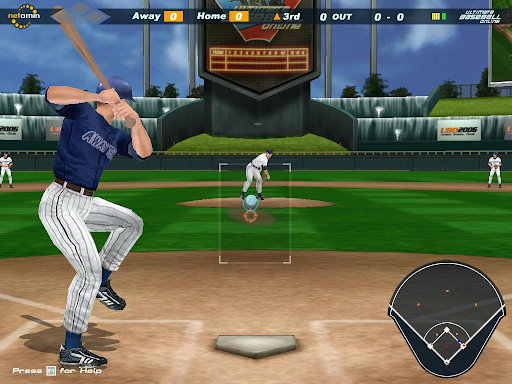
There's something enduring about stepping into a stripped-down baseball game in a browser window, hearing the crack of a bat, and chasing a comeback in just a few minutes. While modern sports simulations push realism with massive budgets, licensed rosters, and hyper-detailed physics, older browser titles continue to attract players through clarity, immediacy, and feel. Games like the classic "Baseball" featured on Jayisgames prove that when mechanics are sharp and feedback is satisfying, players don't need photorealism to feel tension, timing, and reward.
Clean mechanics over complexity
A defining strength of simple browser baseball games lies in their refusal to overcomplicate what makes the sport engaging. Rather than layering dozens of systems, menus, and stat tracking screens, these games isolate the core interaction: timing a swing, placing a pitch, or reacting to a ball in play. That focus creates accessibility without sacrificing challenge. Players quickly understand what they're doing, yet mastery still requires precision and practice. By trimming away excess, these games preserve the essence of baseball--anticipation, reaction, and execution--delivered in a format that's instantly readable and endlessly replayable. The swing often revolves around a single input, but that simplicity hides a demanding timing window that rewards practice and creates a sense of growth over repeated sessions.
Tight feedback loops
Every successful browser baseball game thrives on immediate and satisfying feedback. The moment bat meets ball is not just visual--it's auditory and emotional. A crisp sound effect paired with a clean animation communicates success instantly. These cues reinforce player behavior, helping them refine timing and decision-making without needing complex tutorials. The feedback loop is short: input, result, reaction, repeat. That cycle keeps players engaged in short bursts while steadily improving their skill. The absence of delay or ambiguity ensures that every outcome feels earned, even in a minimalist framework. A sharp crack or a dull miss can communicate success or failure faster than any scoreboard update, making each swing feel responsive and meaningful.
The power of short sessions
Modern players often seek experiences that fit into small windows of time, and browser baseball games deliver exactly that. A single match or challenge can last just a few minutes, making it easy to jump in during a break or between tasks. Despite their brevity, these sessions can feel complete, offering a full arc of tension and resolution without overstaying their welcome. This structure aligns with how people interact with games today--frequently, but in shorter bursts--while still maintaining the emotional highs of longer experiences. Quick sessions still contain meaningful decisions and outcomes, ensuring that even a short playthrough can feel satisfying and worth repeating multiple times in a single sitting.
Capturing late-inning tension
One of baseball's most compelling elements is the drama of a comeback, and simple browser games replicate that feeling with surprising effectiveness. By compressing innings or focusing on key moments, they distill the sport's tension into concentrated bursts where every pitch matters. Players might only need a few swings to turn the tide, yet every action carries weight and consequence. This design choice amplifies excitement, ensuring that even a short play session can feel climactic and memorable. Condensed gameplay removes downtime and highlights only the most thrilling aspects of the sport, allowing players to experience the intensity of late-game pressure without committing to a full-length simulation.
Accessibility across devices
Browser-based games remove barriers that often accompany larger titles. There's no installation process, no hardware requirements, and no steep learning curve that discourages new players. Anyone with a device and an internet connection can start playing almost instantly, which broadens the audience significantly. This accessibility invites both casual players looking for quick entertainment and longtime fans seeking a simplified version of the sport. Loading a game in seconds encourages spontaneous play, and the lack of friction makes it easy to return repeatedly. The convenience becomes part of the appeal, reinforcing how effective design can outweigh technical complexity.
Nostalgia and familiarity
For many players, simple baseball browser games evoke memories of earlier gaming eras when experiences were more straightforward and less demanding. The visuals, mechanics, and pacing often mirror those older styles, creating a sense of comfort and recognition. This familiarity draws players back even as technology advances, offering a break from the increasingly complex systems found in modern titles. Nostalgia isn't limited to graphics or sound--it's about the feeling of rediscovering something uncomplicated and enjoyable. That emotional connection keeps these games relevant, as players return not just for gameplay but for the atmosphere they recreate.
Design that bends realism for fun
Unlike simulation-heavy titles that strive for accuracy, browser baseball games are willing to adjust or ignore real-world rules to enhance enjoyment. They may exaggerate hit distances, simplify pitching mechanics, or remove elements that slow down pacing. These decisions prioritize fun over strict realism, ensuring that every moment contributes to player engagement. By bending the rules, designers create a more dynamic and less frustrating experience that emphasizes action. The result is a version of baseball that feels familiar but operates on its own terms, where enjoyment takes precedence over authenticity.
The role of player imagination
Minimalist design leaves room for players to fill in the gaps with their imagination, which can deepen the overall experience. Without detailed graphics or commentary, players mentally construct the stadium, the crowd noise, and the stakes of each play. This active participation transforms the game into something more personal, as each player envisions their own version of events. The simplicity doesn't limit immersion; instead, it encourages creativity and engagement in a way that more detailed games sometimes overlook. Sparse visuals become a strength, allowing players to project their own ideas onto the experience.
Community and shared rituals
Simple baseball browser games often become part of daily routines or shared experiences among players. Whether it's comparing scores, challenging friends, or revisiting the same game over time, these interactions create a sense of community. Even without complex multiplayer systems, the shared understanding of mechanics and goals fosters connection. Players develop habits around these games, returning regularly to improve performance or beat previous records. That sense of continuity turns a small, simple game into something more meaningful, reinforcing its place in a player's routine.
Real-world baseball connection
"For readers who also follow real-life baseball, skimming an MLB mock draft before the season and then loading up a tight, well-designed browser slugger can feel like two sides of the same ritual--one grounded in projections and names, the other in pure, stripped-down mechanics." This connection highlights how digital simplicity complements real-world complexity. Fans can engage with detailed analysis, statistics, and projections, then shift into a distilled version of the sport that emphasizes instinct and timing. The contrast enhances appreciation for both experiences, showing how different approaches to the same sport can coexist and enrich one another.
Enduring appeal in a modern landscape
Despite the rise of ultra-realistic sports simulations, simple browser baseball games continue to hold their ground by focusing on what truly matters: engaging mechanics, responsive feedback, and accessible design. Their appeal isn't rooted in technological advancement but in how they make players feel during each interaction. They demonstrate that compelling gameplay doesn't require cutting-edge graphics or massive budgets. Instead, it depends on clarity, pacing, and the ability to capture the essence of a sport in its most enjoyable form. Strong mechanics and clear feedback ensure these games remain relevant, proving that simplicity, when executed well, is timeless.



Update