
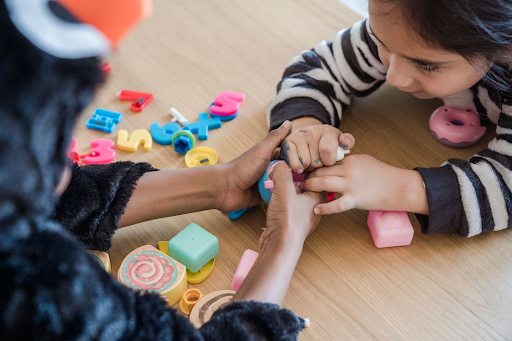
There's a quiet revolution happening in early childhood learning, and it looks a lot like colourful, stacking blocks. For parents wanting to make maths feel less like a chore and more like play, Numberblocks toys offer a clever way to introduce key numeracy concepts. They bring the beloved TV characters into the real world, turning abstract numbers into something children can hold, build with, and explore.
The results can be highly effective for supporting early numeracy development. Toddlers and preschoolers often practise counting, addition, and subtraction during everyday play, often without realising they are engaging with foundational mathematical concepts. It is hands-on learning that feels like fun.
From Screen to Play Mat
One of the strongest features of the Numberblocks product line is its ability to bridge the gap between screen time and active play. The animated series from CBeebies, in which every number is represented as a character with its own personality and behaviour, is already familiar to many young children. In toy form, those characters become interactive learning tools.
When children encounter their favourite numberblocks characters as tangible objects, the transition from watching to doing feels natural. A child who has watched Numberblock Five dance across the screen may eagerly pick up the corresponding toy and begin experimenting with counting, grouping, and building activities. That familiarity encourages curiosity and exploration.
For children aged three to six, when imaginative play is particularly important, this connection between media and physical play can be especially effective. The toys do more than teach mathematical concepts. They extend a world of stories and characters that children already enjoy.
Why Play-Based Learning Makes Maths Stick
Research consistently shows that young children learn more effectively through active participation than passive observation. When a child holds a block, moves it, and connects it with another, they are strengthening cognitive pathways in ways that traditional worksheets may not support as effectively.
This hands-on approach helps explain why Numberblocks toys resonate with many families. They introduce a physical, multisensory dimension to early maths learning. Children do not simply look at a number on a page. They see its colour, recognise its shape, and hold it in their hands. As a result, concepts such as combining a two-block character with a three-block character to create five become easier to understand.
Studies from organisations such as the Education Endowment Foundation suggest that structured play with physical objects can support the development of early maths skills. Numberblocks applies many of these principles through interactive play experiences designed around counting, number recognition, and problem-solving.
Puzzle Mechanics That Build Mathematical Thinking
Unlike many counting toys, Numberblocks sets are designed around puzzle logic, pattern recognition, and problem-solving. They encourage children to move beyond simple counting and begin developing mathematical reasoning skills.
Take the Race to Pattern Palace board game. To progress across the board, players complete patterns and solve visual challenges. It turns maths into an engaging game where success relies on reasoning, pattern recognition, and problem-solving skills.
The wooden puzzles and finger puppets support learning in similar ways. Completing a puzzle helps develop fine motor skills while reinforcing number recognition. Using puppets to act out counting stories transforms mathematical concepts into interactive experiences.
When a child physically moves three puppets next to two others, they are not just looking at a symbol on a page. They are experiencing the number five as a concrete reality. This type of connected learning can help children develop a deeper understanding of how numbers work.
Supporting Curriculum Goals at Home
Parents often worry that educational toys might feel too much like an extension of the school day. Numberblocks toys balance learning and entertainment by presenting mathematical ideas through colourful characters and familiar stories.
The design reflects the visual style of the animated series, making the toys approachable and engaging for young children. At the same time, the educational foundations are intentional.
CBeebies has documented how the Numberblocks series was developed with educational experts to support early mathematics learning. The characters behave in mathematically consistent ways. Numberblock Two, for example, always appears as two stacked blocks, making its value visually clear. This consistency carries through to the physical toy range.
For parents supporting children in their early years of school, this alignment means playtime at home can reinforce concepts being introduced in the classroom. In many cases, children encounter the same mathematical ideas across both environments.
Choosing the Right Set for Your Child
The Numberblocks range includes options suited to different stages of development. Starter sets can support children who are beginning to recognise numbers and count consistently. More advanced sets introduce pattern recognition, sequencing activities, and simple mathematical operations.
Instead of focusing solely on age, parents should consider their child's current level of confidence and mathematical development. An inquisitive four-year-old who can already count confidently to twenty may benefit from activities involving simple addition. A three-year-old who is just beginning to recognise numbers may gain more value from sets that focus on sequencing and number recognition from one to ten.
According to the Australian Curriculum, number sense and mathematical reasoning are foundational skills expected during the early years of schooling. Providing children with access to quality manipulatives can help support the development of these skills through meaningful play.
One of the strengths of Numberblocks toys is their ability to support children at different stages of mathematical development. Many children engage with these toys as puzzle-based play experiences that naturally incorporate mathematical thinking.
Stop Teaching Math. Just Let Them Build It
Maths does not need to feel like a chore. By turning abstract concepts into physical building blocks, Numberblocks demonstrates how play can support learning in a natural and engaging way. Alongside books, games, and other educational resources, these toys give children opportunities to explore mathematical ideas through hands-on experiences that build confidence over time.



Update