
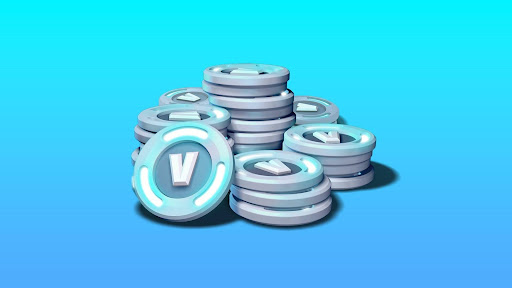
Epic Games just handed Fortnite creators a deal Roblox cannot match. Starting December 2025, Fortnite developers will be able to sell digital items directly inside their own islands, pocketing 100% of the V-Bucks value through the end of 2026. That single policy change turns Fortnite from a game with a creator mode into something closer to the world's most valuable digital economy.
Fortnite Creator Economy
On September 22, 2025, Epic dropped a blog post titled "Fortnite Developers Will Soon Be Able to Sell In-Game Items." The actual news was financial. Fortnite creators will be able to sell the digital durable and consumable items they build for their games, using a Verse-based API and new UEFN tools to create and offer purchasable durable items and consumable items at the point of play.
Before this, creators received payouts based on player engagement, a pool fed by a slice of Fortnite's revenue from Battle Pass sales and cosmetics. Useful, but indirect. The new program gives Fortnite creators a real-money pipeline tied to what they actually control: what happens inside their island.
By the time publishing for in-island transactions opened on January 9, 2026, every serious UEFN team was rewriting its roadmap.
Inside the Fortnite Creator Payout Model
The math makes this move unusual. Fortnite developers will ordinarily earn 50% of the V-Bucks value from in-game item sales, which works out to roughly 37% of retail spending after platform and store fees. That already beats Roblox, which pays creators about 25% from in-experience sales. During the promotional window, the rate doubles to 100% of V-Bucks value, or roughly 74% of what players actually pay.
Here is how the payouts stack up over time.
| Period | V-Bucks Value to Creator | Approx. Share of Retail | Notes |
| Dec 2025 to Jan 31, 2027 | 100% | ~74% | Promotional launch rate, extended to the end of 2026 |
| From Feb 1, 2027 | 50% | ~37% | Standard rate after promo ends |
| N/A | ~25% | In-experience sales baseline |
The promotional rate is nearly three times what Roblox creators currently take home. Epic is paying to attract new creators and poach existing ones, and the publisher is willing to absorb the cost for over a year.
What Fortnite Creators Will Be Able to Sell
Two categories of in-game items open up. Durable items stick with the player permanently inside that island, think cosmetic skins, weapon variants, vehicles, or unlocks tied to a specific game mode. Consumable items get used up, things like temporary buffs, power-ups, respawn tokens, or limited-time abilities. Both are built using the new Verse-based API and UEFN tools and are priced in V-Bucks.
Pricing stays in V-Bucks for a reason. It keeps Fortnite's revenue funnel intact, protects Epic's console agreements with Sony, Xbox, and Nintendo on payment processing, and lets the existing Battle Pass audience spend without friction. A player already topping up V-Bucks can drop 200 of them on a creator's custom weapon skin without breaking flow.
For players chasing the latest creator modes without rebuilding an account from scratch, the shortcut has always been to pick up a stacked Fortnite account with cosmetics and V-Bucks already on it from igitems or its French counterpart. Regional marketplaces like igitems have stayed busy for that exact reason, and the new creator economy gives those accounts more places to spend than ever.
The Sponsored Row and the Engagement Payout Pool
Visibility is the other lever Epic pulled. Since November 24, 2025, the Discover screen has carried a Sponsored Row where Fortnite creators can bid for placement. The campaign setup opened a week earlier, on November 17, through the Creator Portal.
The twist: revenue from the Sponsored Row does not land in Epic's pocket. Through the end of 2026, 100% of it feeds the engagement payout pool shared among Fortnite creators. From 2027 onward, 50% still cycle back in. It is a rare ad product in which the money one creator pays for visibility flows to the broader creator economy rather than disappearing into the publisher's ledger.
Between direct item sales and the Sponsored Row, creators now run two revenue streams in parallel: payouts based on player engagement and in-game sales they control end-to-end.
The Numbers Behind Epic's Confidence
Epic has the receipts to justify the rate. According to Epic's creator economy update, players have logged over 11.2 billion hours across 260,000 creator-made islands since UEFN launched in 2023, generating $722 million in cumulative creator payouts. Seven individual Fortnite creators have already cleared more than $10 million each. With that many hours poured into competitive and creative modes, it is no surprise that demand for coaching has climbed alongside the economy. Players investing real money in islands want to actually win inside them.
Zoom out, and the scale gets almost absurd. Epic Games pulled in roughly $5.7 billion in total revenue across 2024, with Fortnite driving the lion's share. Lifetime, the game has crossed $23 billion in player spending since 2017. Handing creators a 100% take through January 2027 is a rounding error against that kind of top line, and it buys Epic more than a year of unmatched recruitment pitch.
Why This Changes the Roblox Conversation
For years, the creator-economy comparison only went one way. Roblox had the scale, the developer base, and the first-mover advantage. Fortnite had the cosmetics machine. Now Epic is using its cosmetics machine to fund a direct assault on Roblox's creator pipeline, and it is doing it with tools already familiar to anyone who has spent a weekend inside UEFN.
Tim Sweeney has been saying for years that he wants Fortnite to become an open platform, not a game. The December 2025 rollout is the clearest signal yet that "platform" means creators keep a majority of the money their work generates, not a crumb from an engagement pool.
The next move sits with the creators themselves. A Verse-based API, a guaranteed 100% take through January 2027, and a Sponsored Row that recycles ad dollars back into the community add up to the most creator-friendly window any major gaming platform has ever offered. The only question left is which breakout island mode claims it first.


Update