
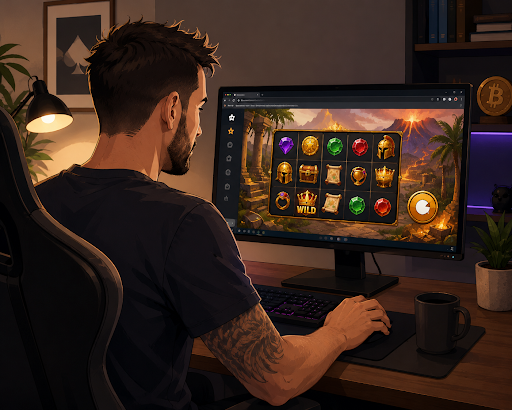
Browser games have become one of the most inventive parts of modern gaming. Sometimes the games that are limited in this way can be a hub of creative activity as developers maximize what games can do. There was a time when playing in a web browser meant simple Flash games with limited graphics and basic controls.
Browsers these days are powerful enough to run detailed strategy games and visually impressive puzzle games without asking players to download a thing.
That convenience has helped browser gaming continue growing. Opening a tab is often all it takes to begin playing. Behind that simplicity sits an incredible number of interesting ideas. We see gaming companies and developers constantly finding new ways to make browser games feel every bit as engaging as traditional downloadable titles.
Casino Games Helped Push Browser Gaming Forward
One of the biggest success stories in browser gaming has been the casino industry.
Developers were already finding ways to recreate classic casino experiences online as early as the 1990s. Games like baccarat and roulette made the move from physical tables to digital screens. This gave players access to familiar games through nothing more than a web browser.
Simple digital recreations gradually evolved into polished experiences with animated tables and smooth interfaces. The games have gradually become more immersive and detailed. The graphics have improved and the range of Cafe Casino table games shows just how many different forms and varieties of table games there are now.
The growth of browser technology also encouraged experimentation.
Thousands of slot games now run directly inside modern browsers. They can cover every imaginable theme while introducing creative mechanics and sometimes interactive mini-games. Developers no longer needed players to download additional software.
Casino gaming demonstrated just how capable browser technology had become. They can be either abstract or realistic due to the technology (and ideas) that we have available now.
From classic favourites to modern adventures 🎰https://t.co/3ln0Pajqlv
— Cafe Casino (@CafeCasinoLV) August 1, 2026
Do you prefer realistic themes or abstract designs?
Let us know what you're spinning today 👇 pic.twitter.com/M2wpA79jF1
Browser Games No Longer Mean Simple Games
Modern browser games cover an enormous range of genres.
We still see some designed for quick ten-minute sessions. But there are also detailed games that can occupy players for months or even years.
One excellent example is A Dark Room.
This simple game looks almost empty. It presents only a few lines of text. It grows into an unexpectedly deep survival adventure filled with exploration and surprising discoveries. Its minimalist presentation proves that creative design often matters more than complex graphics. The New Yorker described it as a game that nobody can explain.
At the opposite end of the spectrum sits Townscaper.
This game acts almost like a digital toy. Every click places colorful buildings that automatically connect into charming seaside towns. There are no enemies or time limits. The appeal of the game is the pleasure of experimenting with architecture and watching beautiful little settlements appear.
These games demonstrate just how flexible browser gaming has become.
Strategy Games Have Flourished
Browser technology has also become an excellent home for strategy games. Developers can use a variety of tools and languages like Java to create more in-depth options.
Neptune's Pride is a perfect example. It was released over 15 years ago but still has a player base. It won an award as webgame of the year at the time.
The game describes itself as a board game for the web. It unfolds over days or even weeks as players expand across a galaxy and carefully plan future moves. The turns happen gradually. That means it suits casual and relaxed browser play particularly well - players can check progress whenever convenient.
Many classic strategy games have found enormous audiences online.
Chess websites allow players to challenge opponents from around the world within seconds. They can even analyze completed games using powerful software.
The game itself has not changed for centuries. The technology surrounding it has.
Creativity Does Not Always Mean Huge Graphics
Some browser games succeed because of unusual ideas rather than visual spectacle.
Cookie Clicker became famous by transforming an incredibly simple concept into something strangely satisfying. What begins with clicking a single cookie gradually develops into a surprisingly detailed management game involving factories and huge production numbers.
Wordle followed a completely different path but became one of the most talked-about games of its time.
Its once-a-day puzzle became a worldwide phenomenon despite consisting of nothing more than guessing a five-letter word.
Interesting mechanics often matter far more than photorealistic graphics.
Multiplayer Browser Games Continue Growing
One of the biggest strengths of browser gaming is how easily multiplayer experiences can be shared.
Games can now allow people to build competitive teams and battle almost instantly without lengthy installations. Strategy takes center stage.
Creative social games have also found success. Skribbl.io turns simple drawing into an entertaining multiplayer guessing game. Town of Salem builds entire matches around deduction and hidden identities. Both demonstrate how browser games can create memorable social experiences using relatively simple technology.
Modern browser games benefit from technology that barely existed during the Flash era.
HTML5 replaced older browser plugins and made games easier to access across different operating systems.
WebGL introduced hardware-accelerated graphics capable of producing detailed three-dimensional environments.
The browser itself has become a powerful gaming platform that supports a wide ecosystem of games.



Update